Questions, answered.
Honest answers to the questions clients ask us most often. Nothing here is legal advice, every file is different.
01
Working with Combei Law
How much does a consultation cost?
The first consultation is free. We will discuss your matter, identify the most important next steps, and give you an honest read on what the file involves before you commit to anything.
How do you charge, flat fee, hourly, or retainer?
It depends on the matter. Many criminal and notary matters are quoted as a flat fee so you know the cost up front. Complex matters or multi-day trials are usually billed hourly against a retainer. We will set out the fee structure in writing before you retain us.
Do you accept Legal Aid?
Yes. Combei Law accepts Legal Aid Ontario certificates for eligible criminal matters. If you think you may qualify, mention it on your first call and we will help you confirm.
Where are you located, and do you take cases outside Toronto?
Our office is at Suite 200, 795 Wilson Avenue, Toronto, ON M3K 1E4. We regularly appear in courts across the GTA and the Golden Horseshoe, Toronto, Mississauga, Brampton, Newmarket, Barrie, Oshawa, Milton, Guelph, Kitchener, Hamilton, and St. Catharines.
What languages do you speak?
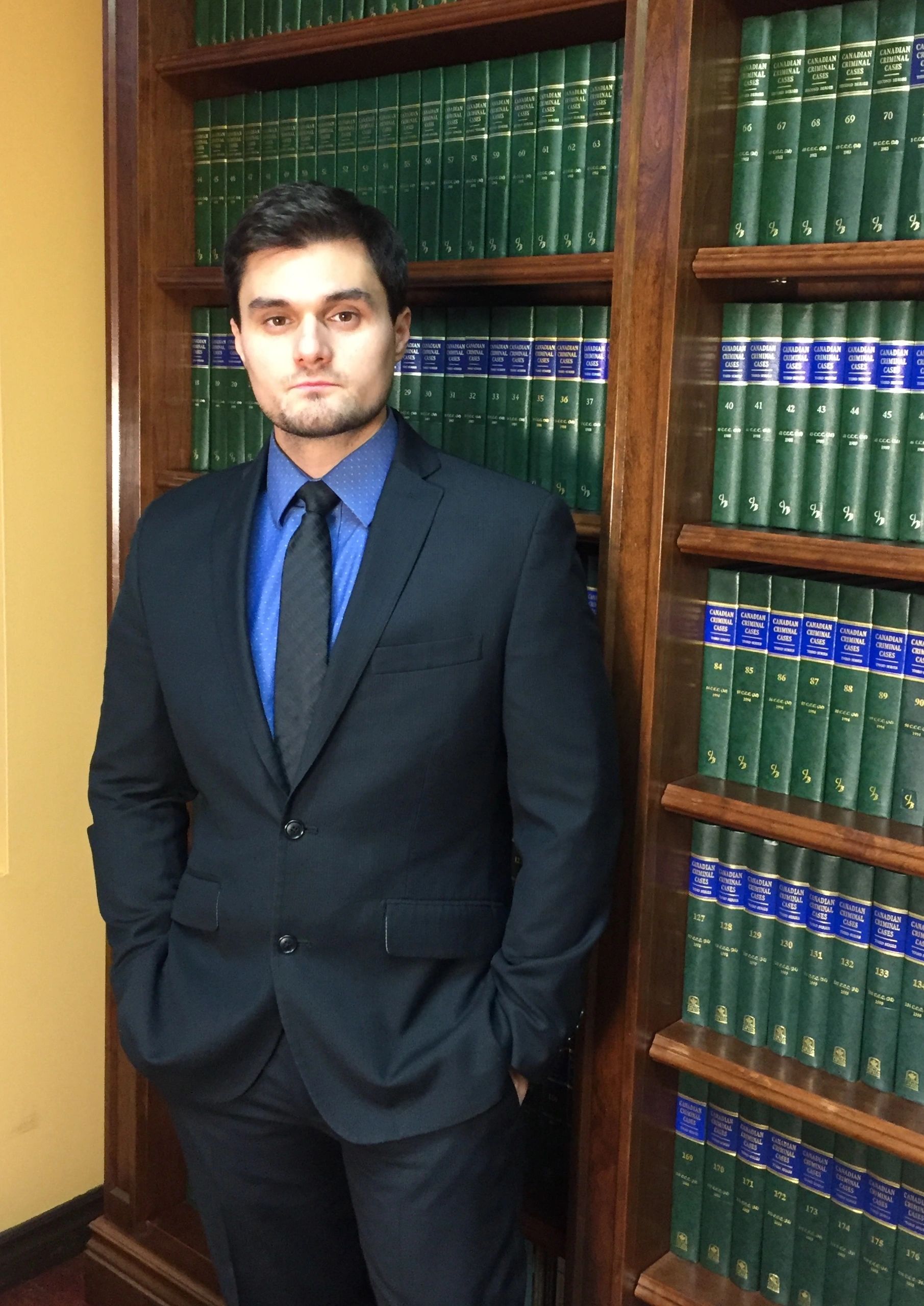
Cristian Combei is fluent in English, Spanish (se habla español) and Romanian (se vorbește română).
How quickly will I hear back after I submit the contact form?
Usually the same business day. For urgent matters, overnight charges, bail hearings, court the next morning, please call the cell directly at (416) 843-2980.
Will Cristian personally handle my file?
Yes. We are not a call-centre firm. The lawyer you meet at the consultation is the lawyer who runs your file, attends court, and signs the documents.
Is everything we discuss confidential?
Yes. Anything you tell us in the consultation, whether or not you ultimately retain the firm, is protected by solicitor-client privilege and stays confidential.
02
Criminal Law
I have been charged with a criminal offence. What should I do first?
Read the documents the police gave you (the promise to appear, undertaking, or release order), note any court dates or reporting conditions, and call a criminal lawyer before you speak to anyone else about the allegations. The earliest decisions in a file often have the largest impact later.
Should I talk to the police?
You have the right to remain silent, and in almost every case you should exercise that right until you have spoken to a lawyer. Police are entitled to ask, but you are not required to answer questions about the allegations, and statements you give can be used against you at trial.
Can I represent myself in a criminal case?
You can, but you should not, especially for any indictable offence. Criminal procedure, Charter applications, and disclosure review are technical, and a misstep at any stage can be hard to undo. Even where the charge looks "minor," a conviction can carry consequences for travel, employment, and immigration.
What is the criminal process, briefly?
After a charge, you appear in court for first appearance, the Crown discloses its evidence, your lawyer reviews and advises you, and the file either resolves (withdrawal, peace bond, plea, or diversion) or proceeds to a preliminary inquiry and/or trial. The stages and timing vary by charge and court.
How long will my case take?
Most provincial-court matters resolve within several months. More complex matters, those proceeding to trial, or those at the Superior Court can take longer. We will give you a realistic timeline once we have seen the disclosure.
What kind of sentence am I looking at?
It depends on the offence, your record (or lack of one), the circumstances of the alleged offence, and the Crown's position. Outcomes can range from withdrawal or a peace bond to a discharge, fine, probation, or jail. We will explain the realistic range that applies to your file specifically.
Will a conviction affect my immigration status or travel?
It can, even a discharge or summary conviction can create issues at the U.S. border, and certain convictions trigger immigration consequences for permanent residents. If this is a concern, raise it at the consultation so we can build it into the strategy.
Do you handle bail hearings?
Yes. If you or a loved one is being held, call us as soon as possible. Bail is time-sensitive and the first hearing is usually the most important.
03
Notary Public & Commissioner
What is the difference between a notary and a commissioner of oaths?
A commissioner of oaths witnesses you swearing or affirming the truth of a document (commonly affidavits and statutory declarations). A notary public can do all of that, plus certify true copies, witness signatures on contracts and powers of attorney, and authenticate documents for use outside Ontario.
What do I need to bring to a notary appointment?
The original document(s) you need notarized or certified, and a valid piece of government-issued photo identification. If a third party prepared the document with specific signing requirements, bring those instructions too.
Can you notarize a Travel Consent Letter for a child travelling without both parents?
Yes. We can prepare and notarize a Travel Consent Letter (sometimes called a Letter of Consent for a Minor Travelling Abroad) using Global Affairs Canada's recommended template, or any custom version your destination requires.
Do you provide authentications and legalizations for use abroad?
We notarize documents and prepare them so they can then be authenticated by Global Affairs Canada and legalized at the relevant consulate. The exact steps depend on the destination country.
Still have a question?
Every file is different. Book a free consultation and we will answer it on a call.